
Table of Contents
- Pet and Allergy Filter Care for San Francisco Homes
- How Often to Change HVAC Filter with Pets and Allergies
- Choosing MERV Ratings That Handle Pet Dander and Allergens
- How Clogged Filters Spread Allergens Through Your Home
- Warning Signs Your Filter Is Loaded with Pet Dander and Fur
- Building a Filter Routine That Works for Pets and Allergies
- Cleaner Air Starts with the Right Filter Habit
Pet and Allergy Filter Care for San Francisco Homes
If you’re wondering how often to change HVAC filters with pets and allergies in your San Francisco home, the answer depends on how much pet dander and airborne particles circulate through your system. Pet dander, pest allergens, and fine dust accumulate daily in our coastal climate, where humidity and salty air accelerate buildup. Without regular replacement every one to three months, these allergens can worsen respiratory issues and strain your HVAC system, turning a small task into costly repairs. Proper filtration is especially important here because asthma affects over 25 million Americans, including 5 million children, and indoor air quality plays a key role in managing these triggers.
San Francisco’s coastal weather is marked by consistent humidity and fog, which speeds up the accumulation of pet dander, pest allergens, and fine dust on HVAC filters, making routine replacement essential for both air quality and system efficiency.
Key Takeaways
- Wondering how often to change HVAC filters with pets and allergies in your San Francisco home?
- If you have a clogged filter in your ducted HVAC system, it won’t be able to trap pet dander and fur anymore, allowing those allergens to recirculate throughout every room in your home.
- When your filter collects pet dander and fur, you’ll notice the signs within your home.
- A consistent filter habit is the simplest way to protect your indoor air quality and keep your HVAC system running smoothly.
How Often to Change HVAC Filter with Pets and Allergies
Wondering how often to change HVAC filters with pets and allergies in your San Francisco home? We recommend checking and replacing your air filter every one to three months, with monthly checks being the safest habit when pets and allergies are present. This keeps airflow strong and helps your system run efficiently year-round.
Dander is shed by pets all the time, and even the smallest bit can make allergies flare up, which causes filters to clog quicker in those homes. Based on San Francisco Expert Heating and Air’s HVAC inspection checklist, you may wait too long before cleaning your filters and they may become clogged and obstruct airflow. That puts a strain on the unit, and over time it can strain components and even cause frozen evaporator coils or overheating. Your energy bill may go up, the life of your equipment may be shortened, and you may end up paying more. Living in San Francisco’s coastal climate brings consistent humidity and fog, which can accelerate the corrosion of your HVAC components. Pet hair and dander also move around more in these conditions. Coastal moisture can also settle on your filters, which will clog up your filters at a much faster rate than in less humid climates.
A simple way to stay on top of filter care is to set a monthly calendar reminder or use the filter’s MERV rating as your guide. If you notice pet hair accumulating quickly or family members sneezing more often, it’s time to swap in a fresh filter. Keeping this schedule protects both your indoor air quality and your HVAC system’s performance. For households with multiple pets or severe allergies, consider replacing filters every six weeks to maintain optimal airflow and reduce allergen circulation. This routine not only preserves your system’s efficiency but also helps maintain healthy indoor air quality throughout the year.
Choosing MERV Ratings That Handle Pet Dander and Allergens
Once you’ve determined when to change your HVAC filter at MERV 8, decide what rating will work for your system. The perfect MERV rating balances capturing particles while allowing air to flow through, especially if you have pets or allergy sufferers in your home.
The MERV scale measures how well a filter traps particles in size from 0.3 to 10 microns using ASHRAE testing procedures that allow you to compare filters directly. According to the EPA, as the MERV rating increases, filters capture smaller particles such as fine pet dander and common allergens. For example, a MERV 13 filter captures at least 50% of 0.3 – 1.0 micron sized particles and would be a reasonable upgrade if your equipment allows. The EPA also states that MERV 8 is the minimum standard for most forced-air systems as they catch large particles such as dust and lint. For those with pets, upgrading to MERV 13 might capture more dander per air pass, but only if your system is capable of dealing with the airflow restriction.
MERV 13 is recommended as an enhanced option for capturing fine particles, but MERV 8 is the basic specification. Prior to installing a higher efficiency filter, you should contact a professional HVAC technician. Filters that capture smaller particles may reduce airflow through units not built to accommodate these types of filters, potentially reducing efficiency or causing damage to your system. HEPA filters, which capture 99.97% of 0.3 micron particles, are located outside the MERV system and cannot be used as a drop-in replacement for standard filters.
Even the highest quality filters will become ineffective over time as they fill up with pet dander and other allergens. Match your chosen MERV rating with a regular replacement schedule in order to keep your indoor air clean and your system working efficiently. This is particularly true for homes where pets and allergy sufferers live in the same spaces.
How Clogged Filters Spread Allergens Through Your Home
If you have a clogged filter in your ducted HVAC system, it won’t be able to trap pet dander and fur anymore, allowing those allergens to recirculate throughout every room in your home.
As a filter becomes loaded up with particles, it can’t catch any more dander. The EPA recommends MERV 13 filters for ducted systems to keep pet allergens in check, but once they become filled up this filter does not meet that requirement any longer. Instead of catching the airborne particles, they take the easiest path around the clogged filter material. Air blows through the contaminated media and returns to your living space. While the pets are still inside and shedding fur and dander this process starts over again every time the heating or cooling turns on, thus raising indoor allergen levels.
For homes that have allergy or asthma sufferers, this is especially serious news. There are over 25 million Americans living with asthma, about 5 million of whom are children, and airborne pet dander is a known asthma trigger. As an air filter that’s become clogged is unable to remove the particles from the air, the indoor air in your home turns into a non-stop exposure, adding to the risk of respiratory irritation and flare-ups. With a dirty air filter in place, even the most thoroughly cleaned home may not be as welcoming for those sensitive to indoor allergens.
Indoor AirPlus homes use MERV 13 filtration to clean up the air inside, but a saturated filter undermines that protection. If the media becomes clogged and air flows around the filter, those allergens get brought right into your home. This mechanical failure turns a filter from a protection to a source of contamination, particularly for homes with pets and allergy sufferers alike. The EPA also points out that keeping your indoor air dry prevents mold from growing, which can make respiratory conditions worse for those who are more sensitive to mold.
Warning Signs Your Filter Is Loaded with Pet Dander and Fur
When your filter collects pet dander and fur, you’ll notice the signs within your home. Many pet owners are unsure about how often to change an HVAC filter with pets and allergies at home; checking it monthly will help answer that question.
Visual signs your filter needs replacing:
- Gray or brown matting across the filter face, indicating heavy dander buildup that restricts airflow and reduces indoor air quality
- Fur and hair visibly stuck to the filter material, especially during shedding seasons when pets shed more heavily and indoor fur accumulation spikes
- No light passes through when you hold the filter up to a lamp, showing it’s fully clogged and unable to trap additional particles
Performance signs your filter is overdue:
- Reduced airflow from vents, making rooms feel stuffy or slow to heat or cool as the system struggles to push air through a clogged filter
- Unusual system noises like whirring or straining as the blower motor works harder to compensate for the restricted filter
- Dustier surfaces in your home despite regular cleaning, as the overloaded filter fails to trap particles and dander effectively
Before you call a professional though, replace the filter first! It’s a quick fix that can improve airflow and indoor air quality. We recommend checking filters once a month if you have pets, and changing them every one to three months based on the amount of shedding, and your household needs. If the problem persists after installing a new filter, it may be time to schedule an appointment to check for more serious issues such as duct leaks or a blocked coil.
Recognizing a faulty filter is one thing, but having a new rhythm ready to go is key.
Building a Filter Routine That Works for Pets and Allergies
If you’re wondering how often to change your HVAC filter with pets and allergies, the answer is simple: every one to three months, and closer to the one-month mark if you share your home with furry friends or allergy sufferers. A clogged filter can’t capture pet dander or pollen effectively, so keeping up with replacements is the fastest way to protect both your system and your indoor air quality.
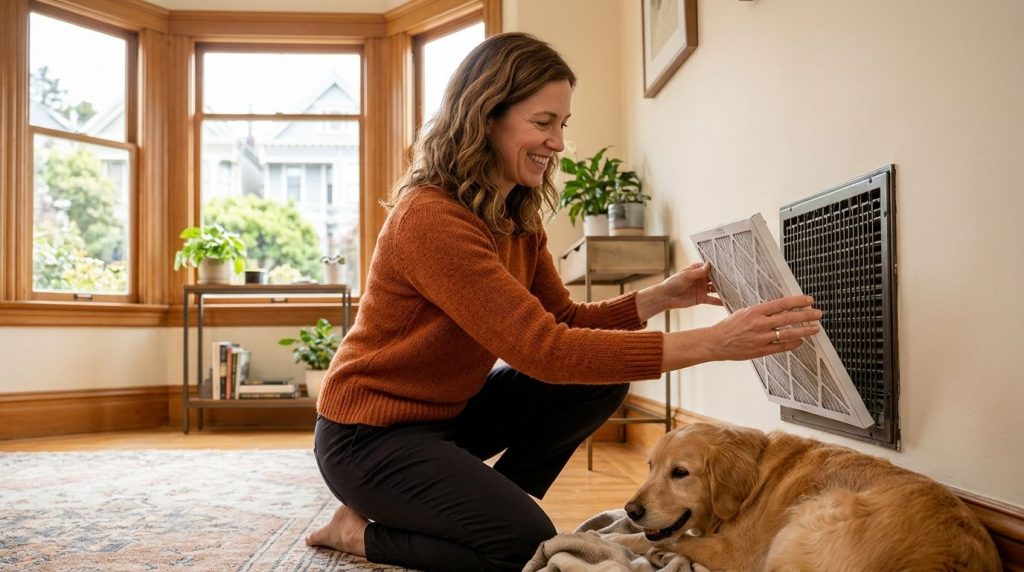
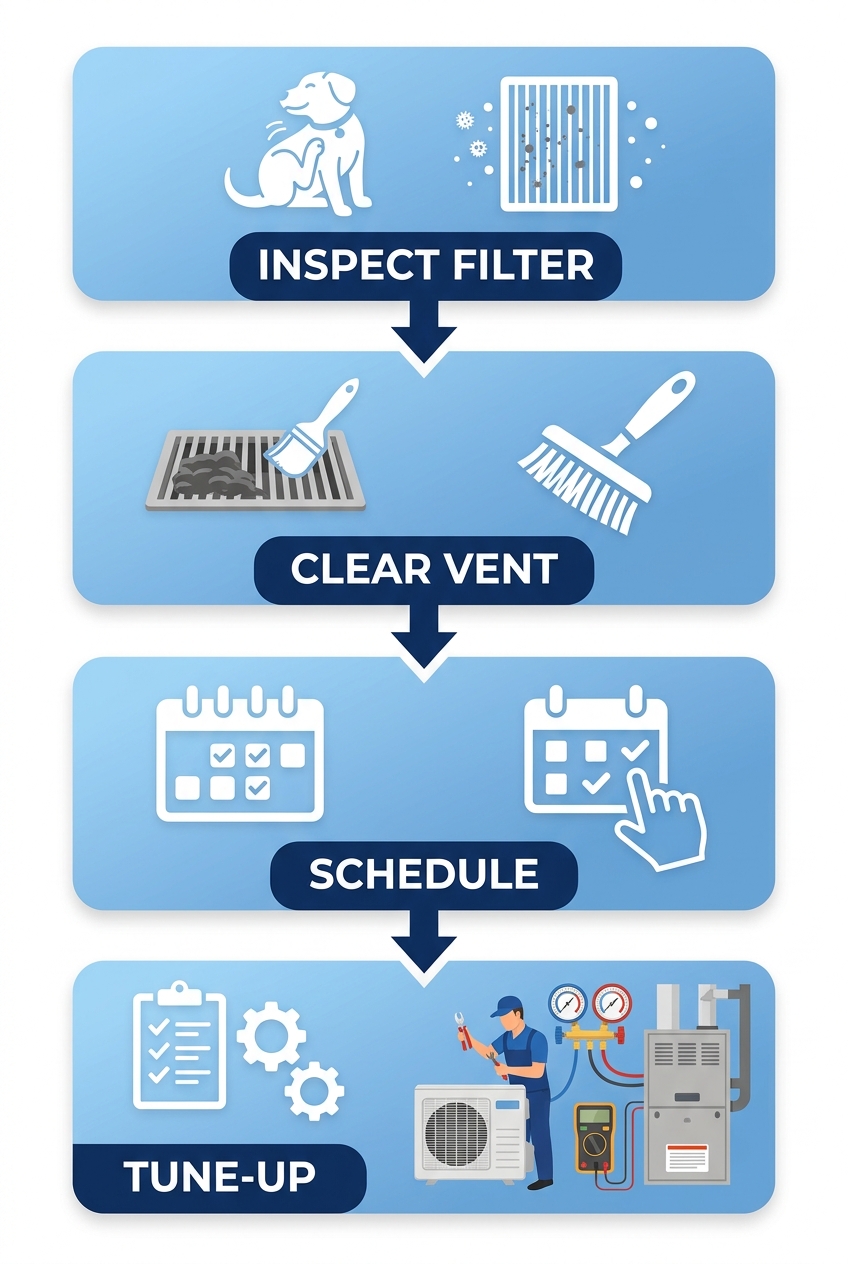
We suggest beginning with a simple monthly routine to keep on top of build up. Start by pulling out the filter and holding it up to light – if you can’t see through it then it’s time for a new one. Check all of your return vents to make sure nothing is obstructing the air flow such as pet beds, curtains and furniture. Set a calendar reminder for the next replacement date so you don’t forget! Paired with your twice yearly professional maintenance visits in the spring and fall, it makes for a nice routine that will keep your system working smoothly without requiring much work.
Regular seasonal check-ins are a great way to add a few steps. Prior to your technician’s arrival, make sure your thermostat is set to the correct temperature and all breakers are in the on position. These little things only take a minute, but they’ll save you major frustration down the road. Over time, this routine will become second nature, and clean air will be normal for everyone living in the home. If you live in a San Francisco home, coastal moisture can accelerate component corrosion, so staying on top of filter changes helps counteract these environmental challenges.
Pet and Allergy Filter Care FAQ
How often should I change my HVAC filter if I have pets and allergies?
San Francisco Expert HVAC recommends changing your HVAC filter every one to three months when you have pets and allergies. Monthly checks are safest to prevent clogging and maintain airflow, especially in coastal climates where humidity accelerates dander and dust buildup.
Does having pets in the home mean I need a higher MERV rated filter?
Higher MERV ratings like MERV 13 capture more fine particles such as pet dander, but only install them if your system can handle the airflow restriction. MERV 8 is the minimum standard for most forced-air systems, while MERV 13 is an enhanced option for better allergen control.
Can a dirty air filter worsen allergy symptoms in my home?
A dirty air filter cannot trap pet dander or allergens effectively, allowing them to recirculate through your home. This can increase indoor allergen levels and trigger respiratory issues, especially for households with allergy or asthma sufferers.
What are the signs that my HVAC filter needs to be replaced sooner than 90 days?
Replace your filter sooner if you see gray or brown matting, visible fur or hair stuck to the filter, or no light passing through when held up to a lamp. Reduced airflow, unusual system noises, or dustier surfaces despite cleaning also indicate an overdue replacement.
How can I tell if my air filter is clogged with pet dander and fur?
Check for visible fur or dander stuck to the filter material, a gray or brown matted appearance, or complete blockage of light when held up to a lamp. These signs show the filter is clogged and unable to trap additional particles effectively.
Cleaner Air Starts with the Right Filter Habit
A consistent filter habit is the simplest way to protect your indoor air quality and keep your HVAC system running smoothly. For homes with pets and allergy sufferers, this routine becomes even more important, as dander and pollen can quickly clog filters and reduce airflow.
When filters stay in too long, they restrict airflow and force your system to work harder, which can lead to frozen coils or overheating. That’s why replacing your filter every one to three months—depending on your household’s needs—is a small step with big benefits.
Figuring out how often to change your HVAC filter with pets and allergies comes down to monitoring your filter’s condition and adjusting as needed. If you’d like help keeping your system in top shape, our team at San Francisco Expert HVAC is here to assist homeowners in San Francisco and the surrounding communities.
Keep Your Air Healthier Today
Now that you know how often to change your HVAC filter with pets and allergies, putting that routine into practice is the best next step for cleaner air in your home. A monthly filter check paired with a consistent replacement habit keeps pet dander and allergens from circulating through your living spaces. It also protects your system from the strain that clogged filters can cause, like reduced efficiency and frozen coils. If you would like a professional to help keep your heating and cooling system in top shape, our team is here for homeowners in San Francisco and neighboring communities. Serving the area since 1997, we are available around the clock at (415) 371-9413. Reach out today and breathe easier knowing your system and your air are in good hands.