
Table of Contents
- Mini Split Energy Costs in San Francisco Homes
- Do Mini Splits Use a Lot of Electricity?
- Constant Running and Thermostat Settings That Drain Power
- Sizing Mistakes, Refrigerant Leaks, and Poor Installation
- Dirty Filters and Blocked Coils Raise Energy Use
- How to Lower Mini Split Energy Use With Maintenance and Smart Habits
- Restoring Comfort and Efficiency in Your San Francisco Home
Mini Split Energy Costs in San Francisco Homes
A lot of people from San Francisco ask themselves if there has been some kind of change in their electric bill ever since they got that mini-split unit installed. The answer often lies in how the system runs and whether it’s getting the care it needs to stay efficient.
If a mini split is kept working right, it could save as much as 5% to 20% off the electricity bill each month. When the machine is maintained properly, it lasts 15 to 20 years instead of 10 to 12, turning upkeep into long-term value. This highlights why looking after these machines can lower mini split costs in San Francisco if installed in a home.
The actual amount of electricity that miniature split systems consume varies according to factors such as system size, usage pattern, and maintenance history. So the following section explains how these cost drivers can be managed in order to reduce their expense.
Key Takeaways
- The bottom line: Are mini splits expensive to operate in SF homes?
- Sometimes, if a mini split seems stuck in overdrive, people wonder why their electric bill keeps climbing.
- Sometimes, if your unit keeps running but can’t satisfy its thermostat, the equipment itself is the culprit.
- Electric bill is too high for a mini split.
- If you’ve ever wondered why is my electric bill so high with mini split running all day, maintenance is usually the answer.
Do Mini Splits Use a Lot of Electricity?
The bottom line: Are mini splits expensive to operate in SF homes? No. If correctly sized and well-cared-for, mini-splits rank at the top as far as efficient HVAC systems go. So yes, using them in your home can help lower your energy bills if you use them right and treat them nicely.
The first issue relates to efficiency, which revolves around factors such as when a mini split uses too much electricity because the system struggles to hold its intended temperature. Often these issues occur for reasons like having lost refrigerant over time or having dirty coils. Once a unit is forced to operate in this mode it has to exert itself far beyond its designed purpose, constantly working hard until there is more energy used than expected. What should have been a minimal-use device turns out to actually cost more on your bills.
Routine preventive maintenance makes a measurable difference. According to San Francisco Expert HVAC, systems that receive regular tune-ups consume 5% to 20% less energy and help lower utility bills. Our technicians catch small issues before they escalate, ensuring your mini split runs at peak efficiency without unnecessary power spikes. Preventive inspections specifically target refrigerant leaks and dirty coils, which can otherwise force the system to work harder and consume more electricity. With bi-annual tune-ups, homeowners can also benefit from priority scheduling and reduced repair costs, adding long-term value beyond energy savings.
If your mini split system uses more electric power than expected, most likely, the problem has something to do with how it is used rather than the product’s technology. This article will go over some commonly wasted habits in order for you to determine which changes can yield better energy efficiency.
Constant Running and Thermostat Settings That Drain Power
Sometimes, if a mini split seems stuck in overdrive, people wonder why their electric bill keeps climbing. Why does mine keep increasing? One reason homeowners ask why their electric bill is so high with a mini split is that constant runtime, often caused by routine habits, can quietly double or triple energy use. Luckily, this issue can be resolved without having to purchase new parts.
There’s another common cause, extreme thermostat settings. Setting the temperature much too high or low causes the compressor to run more often than needed to get the house to that temperature. If you change the temperature manually frequently, it forces the HVAC system to run constantly while it tries to achieve a changing goal. It doesn’t take many adjustments to really drive up the amount you pay for electric power on a month-to-month basis. A couple degrees warmer won’t be noticeable but a few cents more per day on the bill may add up.
It also wastes power if you leave the fan on at all times. Auto mode will automatically turn off the air conditioner once its target temperature is reached, but leaving the fan on at all times means that it’ll keep drawing power from your home’s electrical grid whenever there’s no need for it to operate. And finally, disabling any sort of eco mode or scheduled timers negates the device’s ability to actually save energy in the first place, essentially making it less than a smart mini-split.
Routine maintenance plays a role too. Dirty coils and low refrigerant levels force the system to work harder to maintain comfort, often leading to longer runtimes. According to industry guidance from San Francisco Expert HVAC, preventive maintenance can reduce energy consumption by 5% to 20% by catching issues like these early. While settings explain some cases of constant running, persistent problems may point to deeper issues, like improper sizing or installation flaws, which we’ll explore next.
Sizing Mistakes, Refrigerant Leaks, and Poor Installation
Sometimes, if your unit keeps running but can’t satisfy its thermostat, the equipment itself is the culprit. Three types of problems lead to increased energy consumption and higher home energy costs for residents living within San Francisco. Incorrect equipment sizing, refrigerant leaks, and poor-quality construction are some of the major reasons why systems do not satisfy thermostats as they should.
When the system is the wrong size
The oversized unit will cool the space too rapidly and shut off without doing anything about the moisture that may be there, leaving the spaces wet and making the system short cycle. The undersized unit does just the opposite: it stays running all day long trying to achieve what the thermostat wants, stressing the parts and using lots of electricity, either of which can cause the equipment to fail prematurely and cost more money for the owner. This is something we see quite frequently in old houses such as many of those built in the pre-modern days here in San Francisco when the house layout did not contemplate what most people would consider comfortable.
Refrigerant leaks reduce capacity and waste energy
A leak in the refrigerant reduces efficiency, causing the air conditioner to run for more time to keep the home at the right temperature. There are times when your AC is making strange noises like hissing that may indicate a refrigerant leak. It might also have poor air circulation as well as frost formation on its coils and condenser tubes. These are all signs that something other than dirty filters is wrong. Fixing this problem can only be done by someone who has been properly trained. We would never advise our customers to try fixing their own refrigerants.
Poor installation compounds every problem
Even when the correct-sized system is installed improperly, efficiency is lost. Poorly made connections, too much or too little refrigerant, or poor air flow due to crowded conditions outside can result in unnecessary labor for the unit. Due to the humid and often foggy climate of San Francisco, condenser fins corrode more quickly and mold grows rapidly on heat exchangers. Any small imperfection therefore causes more problems here than elsewhere in more arid climates. Sometimes a quick walk around reveals that temperatures vary in different rooms, or there might be insufficient air flow coming out of the registers. Always make sure the circuit breakers are off before performing any internal inspection of the system.
The best installed system can’t operate as efficiently if basic maintenance has been ignored, which means we’ll move on now to cover the simple steps you can take in order for your components to run their best.
Dirty Filters and Blocked Coils Raise Energy Use
Electric bill is too high for a mini split. The likely culprit is dirt on your air filter and the coils. Your mini split can still be inefficient even if you have a properly sized unit and install it right, because these parts usually get clogged up over time. So this is the most common reason why bills might end up being bigger than usual, and it should be easy to solve.
Your mini split air conditioner’s dirty filter stops air from flowing through your mini split correctly. This causes your mini split AC to work overtime to get the air moving, and that costs you money on the electric bill. Same goes for the coils, too: when the evaporator and/or condenser coils are caked with dirt, the mini split AC can’t cool or dehumidify properly because the heat exchanger is slowed down. This makes the unit turn on frequently, staying on longer cycles all day long to compensate. Because the air off the coast of SF is usually full of salt water and moisture, coils collect more easily here than elsewhere. Salt air also fosters fungus and other types of microorganisms on the coils that make your system less effective and may cause foul smells around the house.
If your air conditioner has problems, figure out what they are. If the filter is discolored, clogged up, or there isn’t enough light coming through it, that means it’s probably time to replace it. Also listen to your AC running on high cycle settings for long periods as well as having excessively humid conditions inside the house which could mean its coil needs servicing. Before you do any visual inspection or cleaning, always switch off all system power at the breaker to avoid electrical hazards.
We recommend replacing your air filter every one to three months, depending on usage, to maintain proper airflow and system efficiency. Dirty filters and coils are easy to stay ahead of with a simple maintenance routine.
How to Lower Mini Split Energy Use With Maintenance and Smart Habits
If you’ve ever wondered why is my electric bill so high with mini split running all day, maintenance is usually the answer. A well-maintained system can cut energy consumption by 5% to 20%, trimming monthly utility bills without sacrificing comfort. Regular upkeep keeps airflow strong, coils clean, and the unit running at peak efficiency—especially important in San Francisco’s coastal climate where humidity and fog accelerate wear.
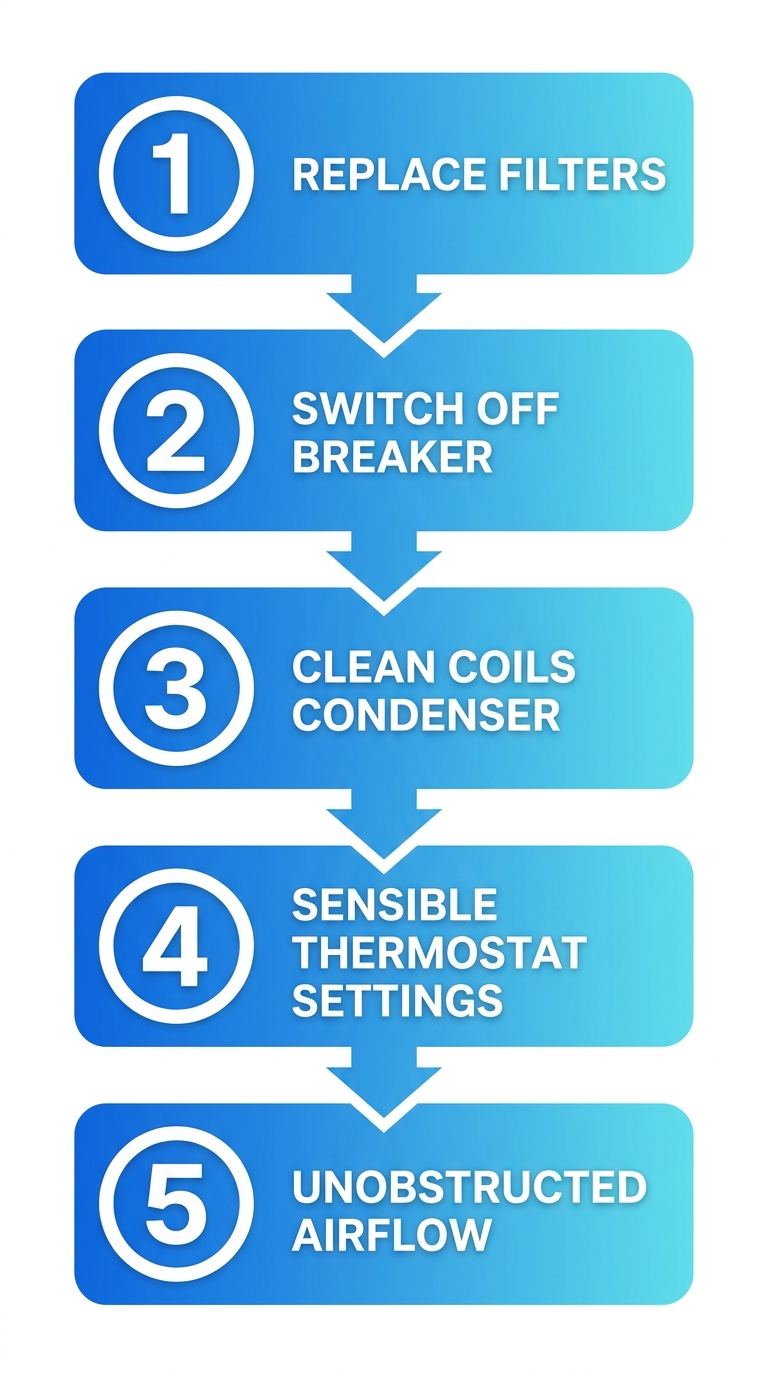
The first step would be replacing or cleaning the air filters every one to three months. If they get too dirty, they restrict airflow, forcing the system to work harder and run longer, which drives up energy use. Remember before doing any maintenance, make sure that all power has been disconnected from the breaker box, otherwise you could risk damaging yourself or your mini split unit.
Next, you need to look at the outdoor condenser unit. San Francisco’s salty air and humidity can lead to corrosion of the condenser fins and promote mold growth on the evaporator coils. Rinse the condenser fins gently with water and remove dirt and other objects near the unit to ensure good air flow. Check inside the unit and clean evaporator coils if there’s too much dust on them. Doing these tasks will help you save money and avoid big expenses from repairing equipment and higher utility bills.
Adopt smart habits to keep energy use in check. Set your thermostat to a moderate temperature and avoid extreme setpoint swings that force the system to overwork. Ensure vents and registers stay unobstructed by furniture or drapes so conditioned air flows freely. Small adjustments like these add up, helping your mini split deliver consistent comfort while using less power.
Your house in San Francisco won’t feel like yours if San Francisco HVAC isn’t kept up. That is why continual maintenance isn’t merely for economy purposes, but because it also ensures that the unit will continue functioning properly into the future. If jobs exceed normal cleaning work or if there looks as though something major may be wrong then seek the support of a pro service instead.
Frequently Asked Questions
Why does my mini split run constantly and drive up my electric bill?
Your mini split runs constantly because it struggles to reach the thermostat’s set temperature. Dirty filters or coils force the system to work harder, while incorrect sizing or refrigerant leaks also cause prolonged operation. Routine maintenance prevents these issues and keeps runtime efficient.
Can incorrect mini split sizing cause higher electricity usage?
Yes. An oversized mini split cools the space too quickly and short-cycles, leaving humidity behind, while an undersized unit runs continuously trying to meet demand. Both scenarios waste electricity and stress the system.
Do dirty filters or blocked coils on a mini split increase energy consumption?
Dirty filters restrict airflow, forcing the mini split to run longer to cool the space. Blocked coils reduce heat exchange efficiency, making the system work harder and consume more power.
How do thermostat mismanagement and emergency heat settings impact my electric bill?
Setting the thermostat too high or low makes the compressor run more often than needed. Leaving the fan on continuously or disabling eco modes also increases energy use, as the system operates without reaching its target efficiently.
Could refrigerant leaks or poor installation be the reason for my high mini split energy costs?
Refrigerant leaks reduce cooling capacity, causing the mini split to run longer to maintain temperature. Poor installation, such as incorrect refrigerant levels or airflow restrictions, also forces the system to work harder and consume more electricity.
Restoring Comfort and Efficiency in Your San Francisco Home
If you’ve been wondering why your electric bill is so high with a mini split, the answer usually comes down to maintenance. A well-maintained system runs efficiently, keeping energy costs in check while delivering steady comfort. Preventive inspections catch small issues like refrigerant leaks or dirty coils before they escalate, saving you from costly repairs and unexpected downtime.
If you take proper care of it, your unit can last 15 to 20 years rather than the usual 10 to 12 for poorly maintained mini splits. By keeping filters clean and vents unobstructed, and pairing those habits with professional tune-ups, you’ll enjoy reliable performance year-round without surprise spikes in your bill.
Our team will work to keep things running properly on your behalf and not in your wallet. Call now at (415) 371-9413 if you want to set up another time for your next maintenance appointment.
Keep Your Mini Split Efficient
You now know why your electric bill is so high with a mini split, from dirty filters and blocked coils to thermostat habits and installation issues. The good news is that routine maintenance can cut HVAC energy consumption by 5% to 20% and lower your monthly utility bills. Preventive inspections also catch refrigerant leaks and dirty coils before they turn into major failures. With proper care, well-maintained equipment can last 15 to 20 years instead of 10 to 12. Our company has been serving homeowners in San Francisco, California since 1997 with heating and cooling maintenance, repair, and installation services. Our team is available 24 hours a day, seven days a week to help restore your system’s efficiency. Call (415) 371-9413 or visit us at 1725 Montgomery St, San Francisco, CA 94111 to schedule your service.