

Table of Contents
Heat Pump Rebates 2026: A Guide for San Francisco Homeowners
For San Francisco homeowners, heat pump rebates 2026 present a timely chance to upgrade to a high-efficiency system. A modern heat pump can lower energy bills and deliver year-round comfort while reducing your carbon footprint.
According to the U.S. Department of Energy, the federal government provides a 30% tax credit up to $2,000 for Energy Star-certified heat pumps installed in existing homes, and this credit stays available through 2032. California’s TECH Clean California program offers up to $4,800 for income-qualified households, and BayREN Home+ adds up to $2,500 for heat pump water heaters. PG&E typically has local incentives as well. Rebates can be combined, but total savings must not exceed the equipment cost.
As a local specialist since 1997, we ensure you meet every rebate requirement. To claim your tax credits and incentives, rely on a trusted HVAC service in San Francisco for expert heat pump installation.
Contact us today for a customized rebate estimate.
Eligibility and Documents for California Heat Pump Rebates
Once you know which rebates apply, the next step is confirming your eligibility and gathering paperwork. Before applying for California energy rebate programs, you need to verify that your household income falls within the required thresholds. The U.S. Department of Energy (Energy.gov) defines eligibility based on Area Median Income (AMI) for your county—for San Francisco County residents, low-income is at or below 80% AMI, while moderate-income spans 80% to 150% AMI. Understanding eligibility for heat pump rebates 2026 requires knowing your household income relative to your county’s median, as these income tiers determine your rebate amount.
Document Checklist
Gathering the right documents ahead of time streamlines your application. The California Energy Commission recommends having these items ready:
- Recent tax returns or W-2s to verify household income
- Proof of homeownership (property tax statement, mortgage documents) or a current rental agreement with signed landlord consent
- Recent utility bills showing service at the property address
- Contractor estimates for the heat pump installation, if already obtained
- Any pre-approval letters issued by the rebate program
Researching Qualified Models
Instructions for Researching Qualified Models
Start with the HVAC equipment certification directory from AHRI. Search by model number or AHRI reference and look for SEER2 ≥ 16 and HSPF2 ≥ 8.1 for Northern climate — always verify these ratings in AHRI’s database, not just manufacturer claims. Save a PDF of the certification page for your rebate records.
Why It Matters
Only models meeting AHRI efficiency thresholds qualify for heat pump rebates 2026. Skipping this verification can mean missing out on thousands of dollars. This step secures your return on investment by confirming eligibility before you commit.
Tips for Finding Eligible Models
- Cross-reference AHRI-certified models with California’s state qualified product list and ENERGY STAR listings.
- Bookmark your search results for quick access during contractor meetings.
- Verify eligibility before scheduling installation to avoid rebate issues.
Verify Income Limits and Program Requirements
Instructions for Verifying Income and Property Rules
- Check Federal Limits: Review the U.S. Department of Energy’s income tiers. According to federal guidance, low-income is defined as 80% of Area Median Income (AMI), while moderate-income is capped at 150% AMI.
- Review California-Specific Rules: Consult the California Energy Commission’s official tables for San Francisco County AMI limits, as state programs like TECH Clean California use distinct criteria.
- Confirm Property Status: Ensure the installation site is an existing single-family home or a qualified multifamily unit.
Tips for Accurate Verification
Use the online income eligibility calculator provided by the California Energy Commission for a preliminary check. Keep recent tax returns or pay stubs handy, and always verify against the latest data, as income limits are updated annually.
Compare Federal Tax Credits and State Rebates
Beyond efficiency, the financial incentives available in 2026 can significantly reduce your out-of-pocket costs. When comparing heat pump rebates 2026, it is essential to understand both federal energy efficiency incentives and California state programs to maximize your savings. According to the U.S. Department of Energy, the federal 25C tax credit covers 30 percent of qualified heat pump costs, up to $2,000.
Instructions for Comparing Federal and State Incentives
To accurately compare these heat pump rebates 2026, follow a clear step-by-step process. First, confirm your federal eligibility: the 25C credit is non-refundable, claimed on your annual tax return, and requires the system to meet specific efficiency ratings. Second, verify your state rebate eligibility through an approved contractor.
Combining Utility Incentives
We encourage San Francisco homeowners to layer local utility programs on top of California state incentives to substantially lower their HVAC upgrade costs. Start by visiting the PG&E website or calling their customer service line to identify active energy efficiency rebates. Always cross-check these offers with the latest details on the California Energy Commission website.
Select a Licensed HVAC Installer
Once you have identified a rebate program, the next step is to select a licensed HVAC contractor in San Francisco. Many heat pump rebates 2026 require your installation to be completed by a qualified professional to be eligible for the incentive.
Complete the Application Process
- Write the model number exactly as shown on the unit’s metal label.
- Enter your contractor’s license number as registered with the CSLB.
- Record the installation date after the program start of January 1, 2026.
- Upload clear scans of income documentation if required.
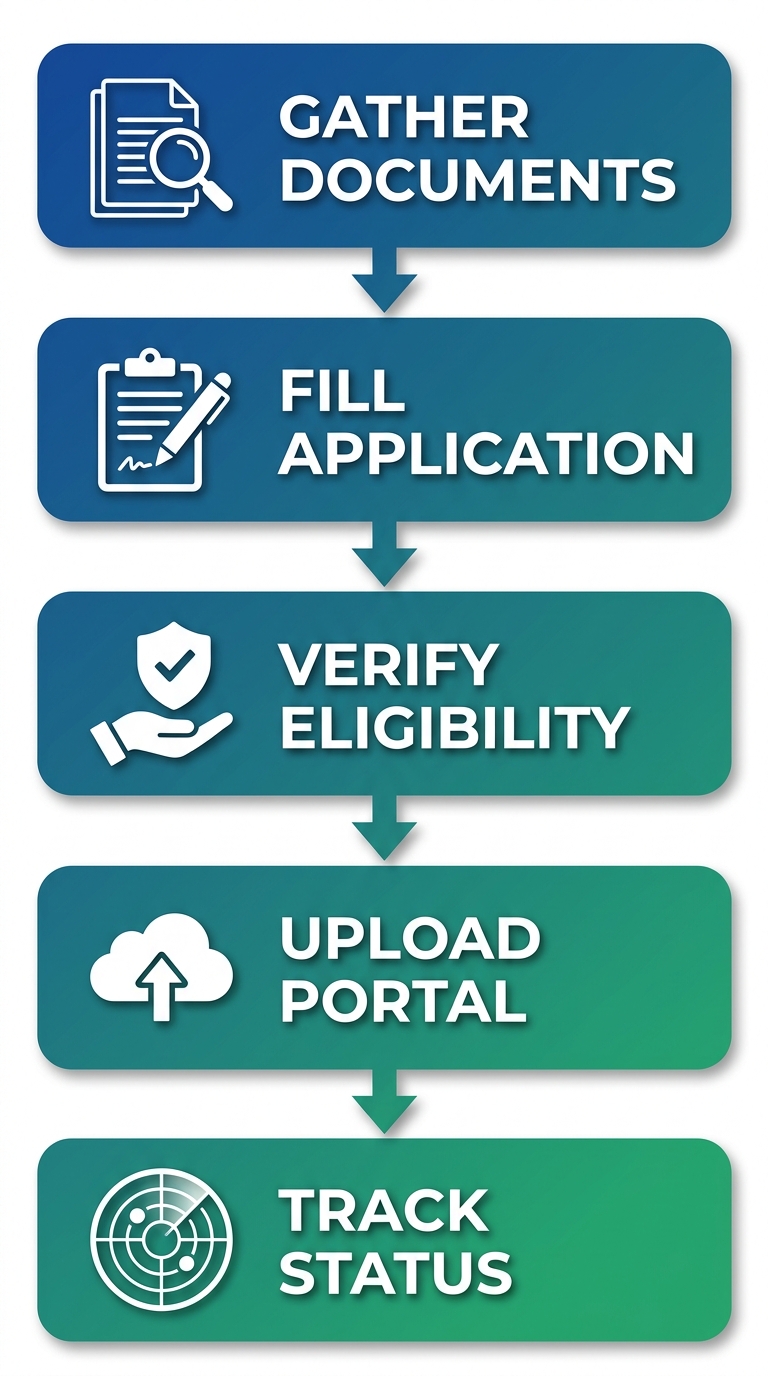
Five-step vertical process flow for HVAC service application
Submit Documentation and Track Your Rebate
Once eligibility is confirmed, submit your documents to claim heat pump rebates 2026 in San Francisco. A complete application ensures faster processing.
Troubleshooting Common Rebate Application Issues
- Incorrect Equipment Details: Mismatched specifications invalidate claims. Fix: Always verify your heat pump’s eligibility against the ENERGY STAR database.
- Income Verification Failures: Many applicants neglect to attach recent tax returns. Use your prior year’s federal return.
- Expired Rebate Windows: Some 2026 programs have limited funding. Submit your application the day equipment is installed.
Start Saving with Heat Pump Rebates in 2026
Start saving with heat pump rebates in 2026 through federal tax credits and local incentives. Exploring all available heat pump rebates in 2026 ensures you capture every opportunity to lower your investment.