
Table of Contents
- Understanding Furnace Repair in San Francisco, California
- Furnace Repair Fundamentals for San Francisco Homeowners
- In-Depth Guide to Furnace Diagnostics for San Francisco Homeowners
- Furnace Maintenance, Safety, and Finding Help in San Francisco
- Advanced Furnace Topics for San Francisco Homeowners
- Your Furnace Repair Partner in San Francisco
- Resources
Understanding Furnace Repair in San Francisco, California
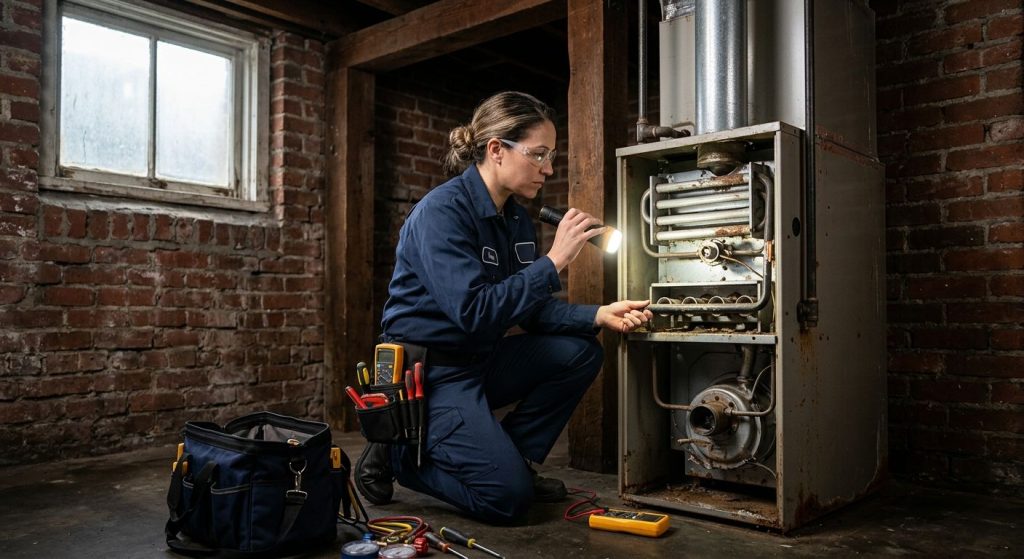
Furnace repair in San Francisco demands attention to challenges rarely seen elsewhere. The city’s persistent fog and coastal moisture accelerate rust and corrosion inside furnace components, often causing pilot light failures and reduced efficiency. With over two decades of local experience, San Francisco Expert HVAC understands how damp air compromises heating systems and why professional furnace repair safeguards both safety and performance. A well-maintained furnace prevents dangerous issues like gas leaks and carbon monoxide exposure.
Several warning signs indicate a furnace needs repair. A unit that produces no heat or struggles to reach the thermostat setting points to component failure. Unusual rattling or squealing noises often mean loose parts or worn belts. Frequent cycling, a yellow burner flame instead of blue, and unexplained utility bill spikes all suggest inefficiency. Addressing these signs promptly through furnace system repair prevents minor issues from becoming costly emergencies. Knowing the furnace repair cost in San Francisco allows for better budgeting, and emergency furnace repair services remain available around the clock for sudden breakdowns.
Licensed technicians in San Francisco service both gas furnaces and electric heat pumps, the most common systems in the Bay Area. Professional repair extends a furnace’s lifespan by five to ten years while ensuring safe, efficient operation. For comprehensive HVAC services in San Francisco, including furnace repair and emergency support, San Francisco Expert HVAC delivers solutions built for the local climate.
Furnace Repair Fundamentals for San Francisco Homeowners
When temperatures dip during San Francisco’s damp winter months, a reliable heating system becomes essential for household comfort. Every homeowner eventually faces the need for furnace repair, and understanding the basics helps you spot issues before they become costly emergencies. Our approach at San Francisco Expert HVAC is to educate customers about common furnace problems, different system types, and the value of professional maintenance — so you can make informed decisions when your heat stops working.
| Furnace Type | Fuel Source | Efficiency Range (AFUE) | Best For | Maintenance Needs |
|---|---|---|---|---|
| Gas Furnace | Natural Gas or Propane | 80% – 98.5% | Homes with gas lines; colder climates | Annual inspection, filter changes every 1-3 months |
| Electric Furnace | Electricity | 95% – 100% | Homes without gas; moderate climates | Filter changes, minimal annual checkup |
| Heat Pump | Electricity (with refrigerant) | 200% – 400% (HSPF) | Mild climates; combination heating/cooling | Annual checkup, coil cleaning, filter changes |
Gas furnaces are rated by Annual Fuel Utilization Efficiency (AFUE), with modern models achieving up to 98.5 percent according to U.S. Department of Energy data. These systems dominate San Francisco neighborhoods where natural gas infrastructure already exists, but they require venting and carbon monoxide detectors for safe operation. Electric furnaces convert nearly all incoming energy into heat and suit homes without gas connections, though operating costs can run higher depending on local electricity rates. Heat pumps represent an efficient alternative for San Francisco’s moderate climate, providing both heating and cooling while achieving Heating Seasonal Performance Factor (HSPF) ratings far beyond traditional furnaces.
In-Depth Guide to Furnace Diagnostics for San Francisco Homeowners
How to Troubleshoot a Furnace That Won’t Start
If your furnace fails to produce heat, begin with a few simple checks. Start by verifying the thermostat is set to “heat” and the target temperature is above the current room reading. Next, confirm the unit has power – inspect the circuit breaker panel for a tripped breaker and check any wall switch that controls the furnace. For older units with a standing pilot light, look through the viewing window to see if the flame is lit. Newer furnaces use electronic ignition, which can sometimes be reset by turning the power off for 30 seconds and then back on.
Understanding Furnace Error Codes and Safety Shutoffs
Modern furnaces include control boards that monitor performance and trigger error codes when something goes wrong. A flashing LED light on the board often spells out a pattern – for example, one short flash followed by two long flashes means “ignition failure.” Safety shutoffs are another layer of protection. A flame rollout switch trips when flames escape the combustion chamber, while a high-limit switch shuts the system down if the heat exchanger gets too hot. These safeguards are designed to prevent fire hazards and carbon monoxide risks.
When to Call a Professional for Furnace Repair in San Francisco
While many diagnostic steps are safe, certain signs require the expertise of a licensed technician. If you smell gas anywhere near the furnace, evacuate the area and call your utility provider and an emergency furnace repair service right away. A suspected crack in the heat exchanger is another emergency; it can leak carbon monoxide, and only a professional with a combustion analyzer can confirm the damage. Recurring problems indicate an underlying condition that basic troubleshooting cannot resolve. Recognizing the boundary between DIY and professional work ensures your home stays warm and safe.
Furnace Maintenance, Safety, and Finding Help in San Francisco
Step-by-Step Furnace Maintenance Checklist for San Francisco Homeowners
| Symptom | Likely Cause | Diagnostic Step | DIY or Professional? |
|---|---|---|---|
| No heat / won’t start | Thermostat, breaker, pilot | Check settings, breaker, flame | DIY/Professional |
| Blowing cold air | Clogged filter, sensor, valve | Inspect filter, clean sensor | DIY/Professional |
| Strange noises | Blower motor, belts, ducts | Listen for location of noise | Professional |
Safety Checks and Carbon Monoxide Prevention
Carbon monoxide (CO) is a deadly, odorless gas that can leak from a cracked heat exchanger. California law requires CO detectors outside each sleeping area. Test them monthly. Visually inspect your furnace for soot, rust, or a yellow pilot flame—signs of potential gas leaks. However, inspecting the heat exchanger for hairline cracks must be done by a professional. For safety, never ignore an alarm; evacuate and call for support immediately.
Using the Right Keywords to Find a Reliable Furnace Repair Service
When you need furnace repair in San Francisco, use search terms like “emergency furnace repair San Francisco” to see highly-rated companies. Check the contractor’s license status through the California CSLB website. Look for adherence to HVAC contractor standards which signal industry commitment and ongoing training.
Advanced Furnace Topics for San Francisco Homeowners
| Maintenance Task | Frequency | Estimated Cost Range | DIY or Professional? |
|---|---|---|---|
| Replace air filter | Every 1-3 months | $5 – $20 | DIY |
| Inspect heat exchanger | Annually | $100 – $250 (tune-up) | Professional |
Efficiency measures like AFUE ratings are critical. While high-efficiency furnaces command a higher initial price, they cut fuel waste and often break down less frequently. Older San Francisco homes may require venting upgrades when switching to high-efficiency models, which technician expertise can help navigate during an emergency furnace repair evaluation.
Your Furnace Repair Partner in San Francisco
When your heating system fails on a cold Bay Area night, you need reliable furnace repair you can count on. San Francisco Expert HVAC has served the community since 1997. Our certified technicians offer emergency furnace repair to keep your family warm and safe. We prioritize transparent communication and lasting solutions for all local heating needs.