
Table of Contents
HVAC Installation, Replacement, and Energy-Efficient Upgrades in San Francisco, California
When you need hvac installation replacement and energy efficient upgrades in San Francisco, California, turn to San Francisco Expert HVAC. We provide complete HVAC installation in San Francisco for furnaces, air conditioners, and smart thermostats, correctly sizing equipment for the Bay Area climate and offering expert hvac installation san francisco. If outdated systems fail to keep your home comfortable, our HVAC replacement in San Francisco removes old units and installs cutting-edge models that comply with the latest energy standards, significantly improving performance and reliability while ensuring reliable hvac replacement san francisco. Moving to an energy efficient HVAC in San Francisco can lower your monthly bills substantially–the U.S. Department of Energy reports that ENERGY STAR-certified products trim energy consumption by 20 to 30 percent; this is why many homeowners choose energy efficient hvac san francisco. This translates to substantial savings year after year while also reducing your home’s carbon footprint.
For homeowners focused on sustainability, we offer green HVAC in San Francisco solutions, including advanced heat pumps and eco-friendly refrigerants, with options tailored to local needs and green hvac san francisco goals. Our local team has decades of experience navigating San Francisco’s building codes and utility rebate programs that help offset the cost of high-efficiency equipment, making HVAC upgrades in San Francisco simple and rewarding and supporting homeowners through every step of hvac upgrades san francisco. Since 1997, San Francisco Expert HVAC has been dedicated to keeping families comfortable and efficient across every season. Contact us today for a free in-home consultation and start saving on energy costs.
Cost and Process of HVAC Upgrades in San Francisco, California
Understanding the costs is essential, but equally important is the process that turns an aging heating and cooling system into a high-performance, energy-saving asset. Homeowners planning an hvac installation, replacement, and energy efficient upgrades in San Francisco face a unique blend of regulatory requirements, climate considerations, and financial incentives that shape every project. This section examines available rebates, cost factors, expected utility savings, the upgrade process, installation timelines, and the critical role of professional load calculations.
Are there rebates available for energy-efficient HVAC systems in San Francisco?
Yes, several programs help offset the cost of hvac upgrades in San Francisco. The California Energy Commission administers the Energy Upgrade California initiative, which connects homeowners with statewide incentives for installing high-efficiency heating and cooling equipment. Local utility rebates through Pacific Gas and Electric Company offer additional savings for qualifying systems that meet or exceed minimum efficiency thresholds. According to the California Energy Commission, eligibility typically requires equipment to be listed on the Commission’s approved product database, and the installation must be performed by a licensed contractor who verifies compliance. Homeowners should review current program requirements directly through the Commission’s website, as rebate amounts and qualifying models are updated periodically to reflect evolving efficiency standards.
What factors cause the cost of HVAC replacement to vary in San Francisco?
The total cost of an hvac replacement in San Francisco depends on several interconnected factors specific to both the property and the equipment selected. System capacity, measured in tons, must align with the home’s square footage and layout. California mandates a minimum SEER rating of 14 for new air conditioning installations, but many homeowners choose higher-efficiency models rated 16 SEER or above, which carry a higher upfront equipment cost. Ductwork modifications represent another significant variable, particularly in older San Francisco residences where existing ducts may require sealing, resizing, or complete replacement. Local labor rates in the Bay Area also influence the final project cost, reflecting the region’s higher operating expenses for licensed contractors. Selecting properly sized equipment based on a professional assessment avoids overspending on unnecessarily large systems.
How much can I expect to save on utility bills by switching to an Energy Star-certified HVAC system?
Switching to an energy efficient hvac in San Francisco that carries the Energy Star certification can reduce annual heating and cooling costs substantially. The California Energy Commission reports that replacing an older system with a modern Energy Star-certified unit typically yields utility bill reductions in the range of 20 to 40 percent, depending on the age and efficiency of the equipment being removed and the specific model installed. These savings accumulate month over month and, combined with available rebates, can meaningfully shorten the payback period on the initial investment. A properly sized green hvac in San Francisco system can maintain indoor comfort efficiently given the city’s relatively moderate climate, further extending equipment lifespan and reducing the frequency of service calls compared with systems operating under more extreme seasonal demands.
What is the typical process for scheduling an energy-efficient HVAC upgrade in San Francisco?
The pathway to an hvac installation in San Francisco follows a structured sequence designed to match the right equipment to each home’s unique characteristics. The process begins with an initial consultation, during which a licensed contractor evaluates the existing system, discusses comfort concerns, and explains available equipment options. Next, a detailed site assessment inspects ductwork, electrical connections, and the physical space available for new equipment. A Manual J load calculation, required by California Title 24, is then conducted to determine the precise heating and cooling demands of the residence. Equipment selection follows, with the contractor recommending models that meet the calculated load, align with efficiency goals, and qualify for applicable rebates. The final stages include scheduling the installation date and completing the physical replacement, followed by thorough testing.
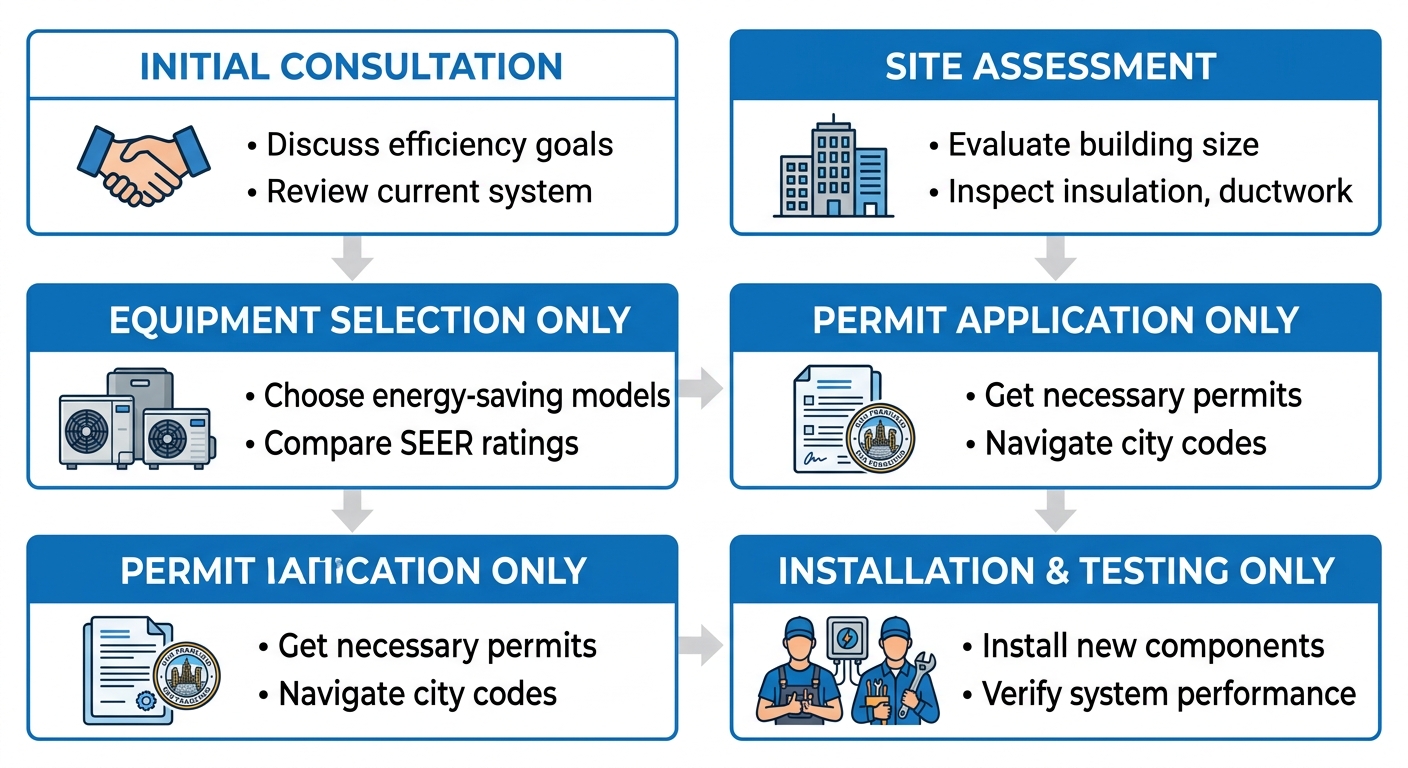
Five-stage process for energy-efficient HVAC upgrades in San Francisco.
How long does a standard HVAC installation usually take for a San Francisco home?
Most standard residential HVAC installations in San Francisco are completed within one to three days, a timeline that accommodates careful removal of existing equipment and precise commissioning of the new system. A straightforward replacement where existing ductwork is in good condition and no major electrical upgrades are required can often be finished in a single full workday. Installations involving ductwork modifications, zoning system additions, or relocation of the indoor air handler may extend to two or three days. Complex projects, such as those requiring extensive ductwork replacement in older homes with challenging crawl space or attic access, can take longer and are typically identified during the initial site assessment so that homeowners can plan accordingly and minimize disruption to their daily routines.
Why are professional load calculations important for HVAC installation in San Francisco?
Professional Manual J calculations are the foundation of a properly functioning heating and cooling system and are mandated by California Title 24 for any hvac installation, replacement, and energy efficient upgrades in San Francisco. A Manual J calculation analyzes the home’s square footage, window orientation, insulation levels, air leakage rates, and local climate data to determine precisely how much heating and cooling capacity is required. The California Energy Commission identifies correct system sizing as a prerequisite for both equipment rebate eligibility and long-term operational efficiency. An oversized system short-cycles, increasing component wear and failing to adequately dehumidify indoor air, while an undersized system runs continuously without reaching the desired temperature. Investing in this calculation upfront protects the performance of the entire project and helps homeowners avoid costly operational problems from incorrect equipment sizing.
Permits, Timeline, and Warranties for HVAC Projects in San Francisco, California
Before you start your HVAC project, understanding San Francisco’s permit timelines and warranty considerations is essential. This section covers everything from Title 24 standards to repair-versus-replace decisions. Planning for hvac installation replacement and energy efficient upgrades in san francisco requires careful navigation of local codes, building department rules, and home-age factors that affect project scope and cost.
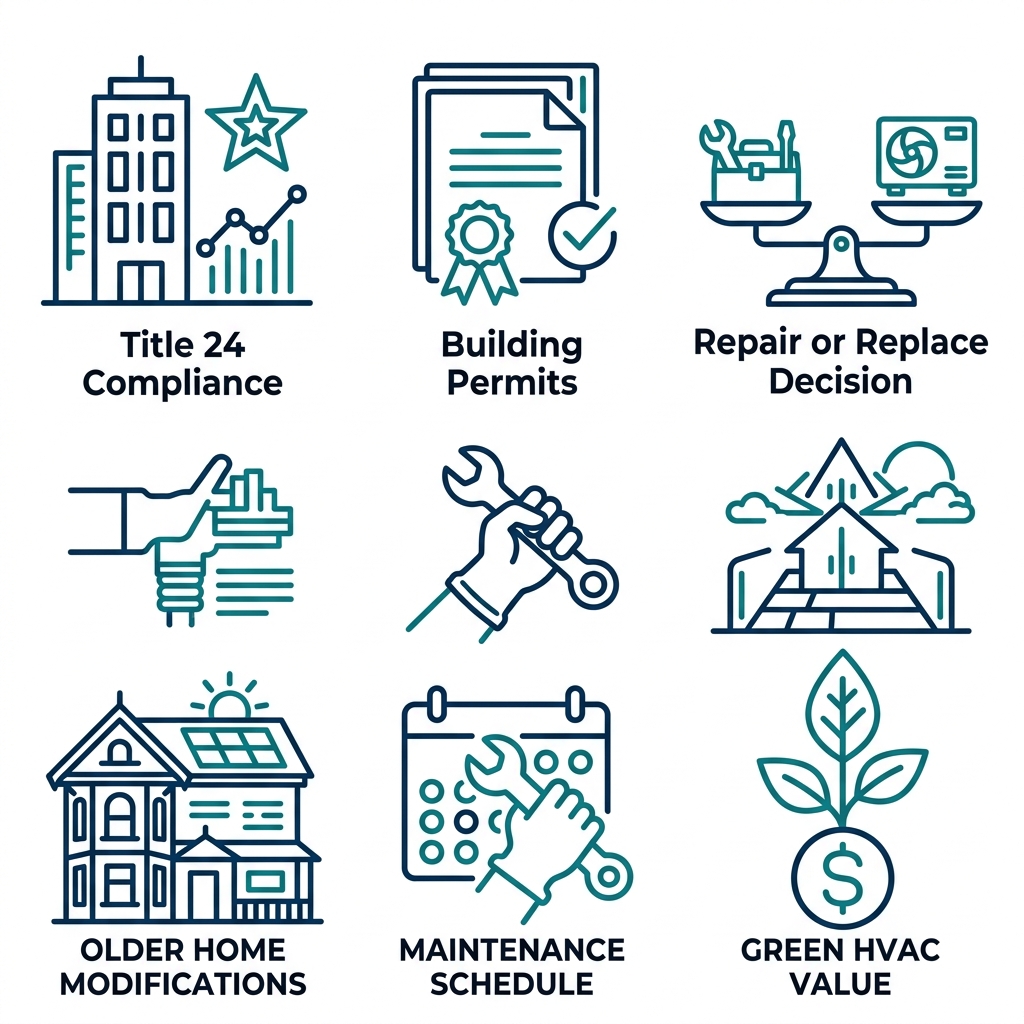
Key considerations for HVAC projects in San Francisco, California.
How do San Francisco’s Title 24 energy standards affect my HVAC installation or replacement?
California’s Title 24 energy code imposes rigorous efficiency requirements on all new installations and replacements in San Francisco. The standards mandate minimum SEER2 and HSPF2 ratings, thorough duct sealing, and verified performance testing. According to the U.S. Department of Energy, proper duct sealing can cut energy loss by as much as 30 percent, making it a cornerstone of modern system performance. For hvac replacement san francisco projects, this means your contractor will perform airflow measurements, refrigerant charge verification, and leakage tests to confirm compliance. Allowing extra time for these mandatory checks ensures your upgrade meets code and delivers lasting efficiency.
Do I need a building permit for HVAC installation in San Francisco?
Most HVAC installations and replacements require a building permit from the San Francisco Building Department. The permit process confirms that the work meets safety and energy codes, and it triggers mandatory inspections after installation. For hvac installation san francisco projects of any scale, skipping this step can lead to fines, delays, or complications when selling your home. Permit fees and processing times can vary, so it is wise to contact the San Francisco Building Department directly for current schedules and costs. Our team helps homeowners manage all necessary paperwork so that your project stays on track and fully compliant from start to finish.
How do I know if it is time to repair or replace my HVAC system?
Making the right call between repair and replacement often comes down to age, cost, and comfort. If your system is more than 15 years old, needs frequent fixes, or if you notice steadily rising utility bills, it may be time to consider hvac installation replacement and energy efficient upgrades in san francisco rather than another temporary repair. Inefficient operation, uneven temperatures, and strange noises are additional signals that your equipment is losing its ability to perform. A professional diagnostic can reveal whether a component fix will do the job or if a modern, high-efficiency unit makes better financial sense. Acting early avoids emergency breakdowns and locks in long-term energy savings.
How does the age of my home impact the difficulty and cost of HVAC replacement?
Older San Francisco homes, particularly those built before the 1980s, often present unique challenges during HVAC replacement. Many of these properties were designed without modern ductwork, so adding or retrofitting ducts is frequently necessary to accommodate a new system. Electrical panel upgrades may also be required to support today’s high-efficiency equipment, and structural modifications such as attic access improvements can add to the timeline. For hvac upgrades san francisco homeowners pursue in vintage houses, these extra steps increase upfront complexity but are essential for safe, efficient operation. Factoring these potential needs into your budget helps prevent surprises and ensures a smooth installation.
What are the maintenance requirements for keeping a green, high-efficiency HVAC system running optimally?
An energy efficient hvac san francisco system delivers its best performance only with consistent preventive care. Annual professional tune-ups should include coil cleaning, refrigerant checks, blower calibration, and thermostat testing to keep components working at rated efficiency. You can support that routine by changing air filters every one to three months, especially during peak cooling and heating seasons when the system runs harder. Duct inspections once a year help catch leaks that waste conditioned air and strain the equipment. Following these simple steps preserves the green benefits of your system, lowers energy use, and extends the equipment’s service life.
Do green HVAC options provide better long-term value than traditional systems in San Francisco?
Green HVAC systems such as high-efficiency heat pumps and solar-ready units often carry a higher initial price tag, but they reward homeowners with substantial ongoing advantages in San Francisco’s climate. A green hvac san francisco installation can cut monthly utility costs by delivering more heating or cooling per dollar spent, and many components experience less wear because they run at lower speeds over longer cycles. Reduced maintenance demands and a smaller carbon footprint add to the appeal. When evaluating the investment, consider the total cost of ownership over a decade — eco-friendly HVAC options tend to outperform conventional models in both durability and savings, making them a smart choice for comfort and sustainability.
Armed with this knowledge, you can move forward confidently. Our team at San Francisco Expert HVAC is ready to guide you through each step.
Still Have Questions? Contact San Francisco Expert HVAC
Still have questions about your HVAC needs in San Francisco? Our team at San Francisco Expert HVAC is ready to provide personalized guidance on hvac installation replacement and energy efficient upgrades in San Francisco, plus furnace repair, AC installation, and heating maintenance, with same-day response and clear, friendly communication. Call us at (415) 371-9413 or use our website’s contact form–we’re here to help with fast, local expertise.
Resources
Discover DOE HVAC Efficiency Guidelines for Energy Savings