
Table of Contents
- Heat Pump vs Central AC Costs in San Francisco
- San Francisco Climate and HVAC System Demands
- HVAC System Options and Local Installation Services
- Evaluating Costs and Rebates for San Francisco Homeowners
- Planning Your Heat Pump or Central AC Installation
- Making the Right HVAC Investment for Your Home
Heat Pump vs Central AC Costs in San Francisco
When it comes to costs in San Francisco, the heat pump vs central ac cost equation starts with upfront pricing. Our installation cost data shows that a 3-ton heat pump averages $12,000–$16,500, while a comparable central AC and gas furnace system costs $10,500–$14,000. For a precise breakdown tailored to your property, see our guide on HVAC replacement cost. California heat pump rebates from the California Energy Commission can reduce net cost by $500–$1,500, often narrowing that initial heat pump vs central ac cost gap. Over a 15-year hvac lifecycle cost comparison, the heat pump’s lower operating costs, saving $400–$650 annually, offset its higher upfront price, while the central AC’s lower initial cost leads to higher long-term energy bills. Commercial projects follow the same comparative principles, though scale and ROI timelines may differ. This cost picture underscores the need for financing strategies, discussed next.
San Francisco Climate and HVAC System Demands
San Francisco’s climate is unlike any other in California, creating a distinct set of demands on your HVAC system. Average summer highs stay around 65–70°F while winter lows rarely dip below 45°F, yet the question of heat pump vs central ac cost often emerges because heating and cooling needs can vary within the same day. Neighborhood microclimates—from the foggy Sunset to the sun-drenched Mission—mean a single home may need both heat in the morning and cooling by afternoon.
Coastal humidity persists year-round, so effective dehumidification is vital even when temperatures are mild. Mild winters still require reliable heating for chilly, foggy nights, and occasional heat waves above 90°F demand capable cooling. These frequent swings increase system cycling, making efficiency ratings like SEER2 and HSPF2 essential. California’s Title 24 energy codes, set by the California Energy Commission, push homes toward high-performance equipment, and California heat pump rebates overseen by the Commission help offset the upfront cost.
An HVAC lifecycle cost comparison matters in this climate because a properly sized, high-efficiency system—backed by Department of Energy initiatives promoting mixed-climate solutions—reduces waste and improves comfort. In our decades of experience serving San Francisco, we find that standard equipment designed for hotter regions often struggles here, so tailored sizing and variable-speed technology make a measurable difference. These climate factors directly affect which HVAC systems perform best—and how they should be sized and installed for maximum efficiency.
HVAC System Options and Local Installation Services
Now that you know when to replace your system, let’s compare the top choices for San Francisco homeowners. Two leading options are heat pumps and central air conditioners. Heat pumps provide both heating and cooling, while central AC requires a separate furnace. Understanding the cost differences and available incentives helps you make a confident, informed decision about your family’s comfort.
When evaluating heat pump vs central AC cost, San Francisco homeowners should look beyond the initial price. Heat pumps often cost a few thousand dollars more upfront than a basic central AC-plus-furnace, but they slash monthly energy bills and eliminate the need for a separate furnace. For a detailed local breakdown, see our HVAC replacement cost guide. Over a typical 15-year lifespan, the heat pump vs central AC cost analysis usually favors the heat pump thanks to lower operating costs, making an HVAC lifecycle cost comparison a smart move that can reveal thousands in hidden savings.
California heat pump rebates for 2026 further improve the financial picture. According to our rebate guide and the California Energy Commission, eligible households can combine up to $2,000 in federal tax credits with state programs like TECH Clean California, which offers thousands more. These incentives can dramatically lower the net cost of a high-efficiency system for San Francisco families, bringing a top-tier heat pump well within budget.
To secure the best deal, request multiple quotes from licensed San Francisco installers who understand local permit and seismic codes. Our replacement cost guide details how labor rates, seismic upgrades, and permit fees affect your final price. After deciding on the best system, the next step is finding a qualified installer—we’ll cover that next. Investing this time upfront ensures you get a fair price and a system sized correctly for your home.
Evaluating Heat Pump vs Central AC Cost and Rebates for San Francisco Homeowners
Evaluating the heat pump vs central AC cost in San Francisco requires understanding both upfront and long-term expenses. While a central AC is cheaper to buy, it lacks the heating capability that makes a heat pump a year-round asset.
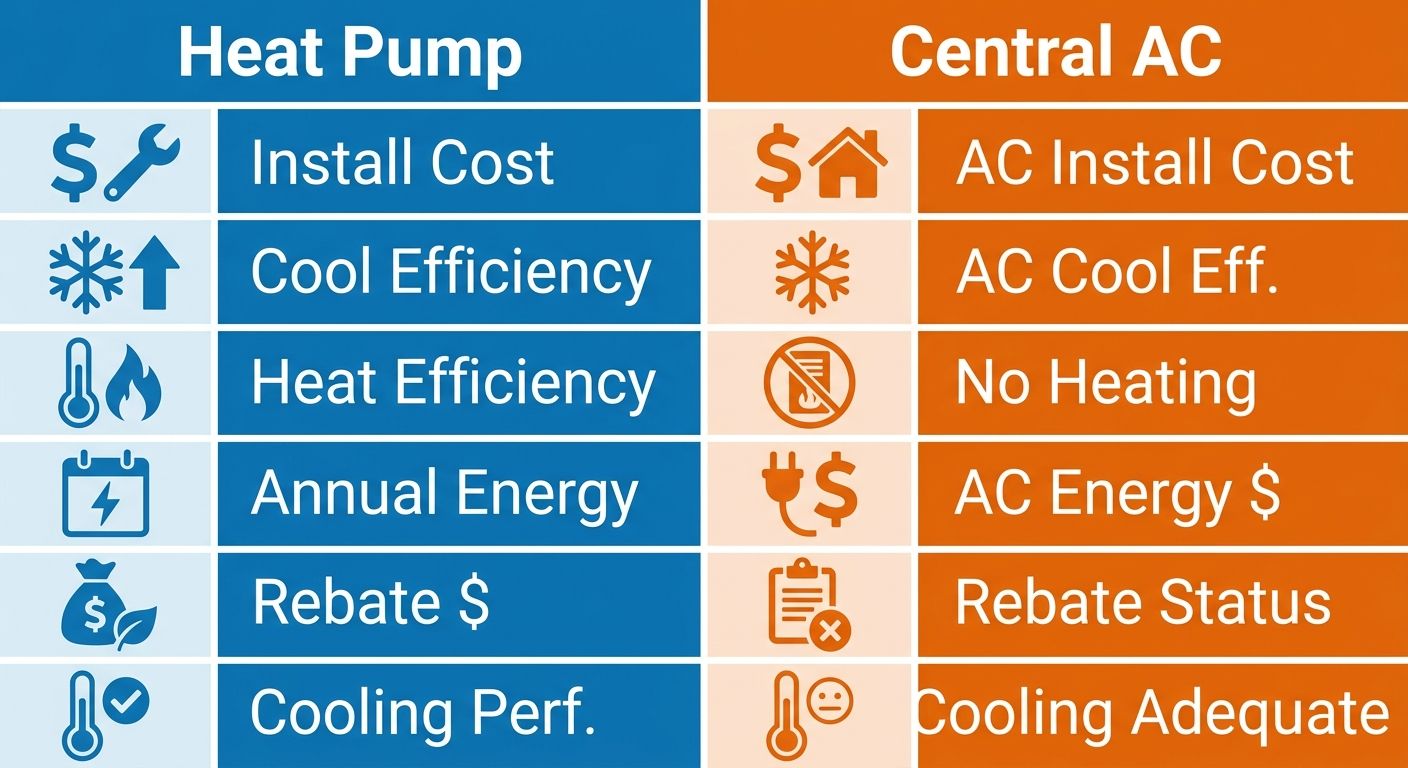
While the infographic offers a high-level overview, the table below quantifies the key differences. We use San Francisco installation data, California’s elevated SEER2/HSPF2 minimums, and 2026 rebate figures. Because central AC has no heating component, the heat pump’s HSPF2 rating immediately shows its year-round value.
| Aspect | Heat Pump | Central AC |
|---|---|---|
| Installation Cost Range | $8,000 – $15,000 | $5,000 – $10,000 |
| Cooling Efficiency (SEER2) | 15+ (CA standard) | 15+ (CA standard) |
| Heating Efficiency (HSPF2) | 8.2+ (CA standard) | — |
| Estimated Annual Energy Cost | $600 – $900 | $400 – $600 |
| Rebate Eligibility | Up to $2,000 federal; up to $4,800 CA TECH | None |
| Cooling Performance in SF’s Mild Climate | Excellent, dual heating/cooling | Excellent cooling |
| Energy cost estimates based on typical SF household usage and mild climate. |
As shown, the heat pump’s higher upfront cost is partly offset by generous rebates—up to $2,000 federal and $4,800 state incentives. Over its lifespan, the combined heating and cooling savings often make it the smarter choice.
For San Francisco homeowners, 2026 presents the ideal time to upgrade. Aligning your purchase with the broader California clean energy policy objectives can further reduce your environmental impact and utility bills. Contact a licensed local HVAC professional to confirm your rebate eligibility and get a personalized estimate—before program funds expire.
Planning Your Heat Pump or Central AC Installation
Now that you understand the key differences between heat pumps and central AC, comparing heat pump and central AC costs in San Francisco is the first step toward a wise investment. Installation pricing varies by system type, SEER rating, and ductwork condition. A Manual J load calculation ensures your new equipment is sized correctly for your home, preventing inefficiency and unnecessary wear.
Before you purchase, check your eligibility for California heat pump rebates—these incentives can reduce upfront expenses significantly. Obtain at least three written quotes from licensed California contractors to ensure fair pricing. Heat pumps provide both heating and cooling, shifting the HVAC lifecycle cost comparison in their favor over separate AC and furnace systems. If you are also replacing your furnace, review the high efficiency furnace installation cost guide to bundle your upgrade and maximize savings.
A pre-installation inspection is critical. Evaluate your ductwork, electrical panel capacity, and thermostat compatibility. San Francisco Expert HVAC’s inspection checklist can guide this assessment. If your home lacks ductwork, ductless mini-splits offer an efficient alternative. With a solid plan and verified contractor credentials, you are ready to schedule your installation.
Making the Right HVAC Investment for Your Home
Comparing heat pump vs central ac cost means weighing upfront expense against long-term savings. The California Energy Commission offers California heat pump rebates that reduce the initial investment. An hvac lifecycle cost comparison over 10–15 years shows high-efficiency heat pumps offer lower total ownership costs. For California’s climate, target a SEER above 16 and HSPF of 9 or higher. Federal initiatives like EPA climate and energy programs support residential adoption. Contact San Francisco Express HVAC for personalized quotes and installation guidance.